

Web development has changed significantly in recent years. Businesses now need applications that are fast, secure, easy to use, and capable of handling large numbers of users without affecting performance. At the same time, development teams are expected to deliver products faster while maintaining quality.In this environment, full-stack JavaScript ecosystems continue to gain attention, and the MEAN Stack remains a popular choice for building modern web applications. As demand for skilled professionals grows, many learners are also choosing Software training institutes in Chennai to develop practical skills and prepare for industry opportunities.
This blog explores current trends, essential tools, practical applications, and future opportunities connected with this technology stack. Whether you are an aspiring developer, a technology enthusiast, or someone planning a career in software development, understanding this ecosystem can provide valuable direction. Additionally, learners exploring IT field courses can benefit from gaining knowledge of modern development technologies and industry practices.
Understanding the MEAN Stack
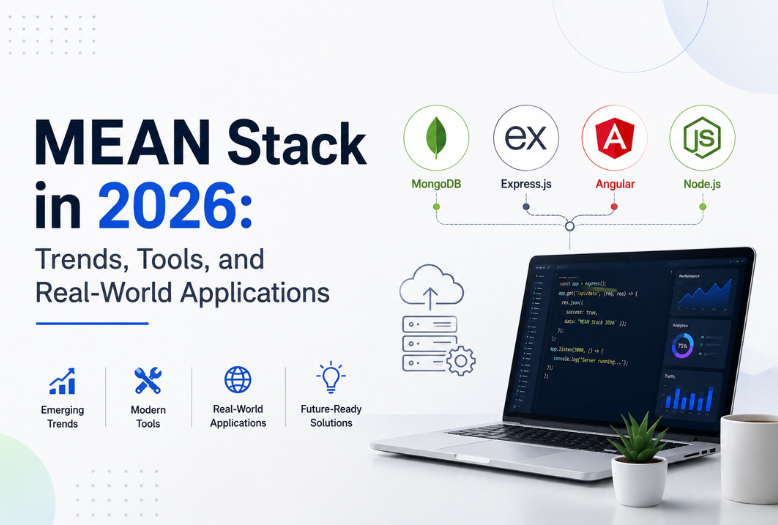
The MEAN Stack is a JavaScript-based technology combination used to build full-stack web applications. Each component plays a specific role in application development:
- MongoDB – A NoSQL database used for storing application data.
- Express.js – A lightweight backend framework for building APIs.
- Angular – A front-end framework for creating dynamic user interfaces.
- Node.js – A runtime environment that enables JavaScript execution on servers.
Together, these technologies create a complete ecosystem where developers can use a single programming language across both client-side and server-side development.
As a result, development becomes more streamlined, communication between teams improves, and deployment workflows become more efficient.
Why Full-Stack JavaScript Continues to Grow in 2026
Technology adoption is rarely driven by trends alone. Instead, organizations choose frameworks and development models based on speed, scalability, cost, and long-term maintainability. As a result, several factors continue to support the popularity of modern JavaScript-based stacks.
Faster Development Cycles
Companies want products launched quickly. Since developers work with a unified language across the application, onboarding becomes easier and code sharing becomes possible.Consequently, teams reduce context switching and accelerate delivery.
Strong Community Support
Open-source ecosystems continue to evolve. As a result, developers benefit from extensive documentation, reusable libraries, and active community contributions.
Cloud Compatibility
Modern applications increasingly rely on containers, serverless architecture, and distributed environments. Furthermore, these technologies integrate well with cloud platforms and DevOps workflows.
Cost Efficiency
Additionally, using a single language across multiple layers reduces hiring complexity and lowers training overhead for organizations.
Key Trends Transforming Software Development in 2026
Technology landscapes continue to evolve, and several important trends are influencing how full-stack applications are built.
- AI-Assisted Development – Developers are using AI tools to improve coding speed, testing, debugging, and productivity.
- API-First Development – Applications are increasingly built with APIs to support better integration across platforms and services.
- Cloud-Native Applications – More businesses are moving applications to cloud environments for flexibility and scalability.
- Serverless Architecture – Developers are reducing infrastructure management and focusing more on application development.
- Security-First Approach – Security practices are being integrated throughout the software development lifecycle.
- Microservices Architecture – Applications are being divided into smaller services for easier maintenance and scalability.
- Low-Code and No-Code Adoption – Businesses are using faster development approaches for building applications.
- Automation and DevOps Growth – Automated testing, deployment, and monitoring continue to improve development speed.
- Progressive Web Applications (PWAs) – Web applications are becoming more responsive and app-like across devices.
- Focus on Developer Experience (DX) – Companies are investing in tools and workflows that improve developer productivity.
Technologies That Improve Full-Stack Development Workflows
Technology stacks become more powerful when supported by complementary tools. In modern full-stack development, these tools help improve productivity, simplify collaboration, enhance testing, and ensure smoother deployment processes.
1. Development Environments
Development environments are where developers write, test, and manage application code. Modern editors improve efficiency through intelligent features and built-in development support.
Popular environments focus on:
- Real-time collaboration
- Code formatting
- Source control integration
- Debugging tools
- Extension support
These capabilities help developers reduce manual work, maintain cleaner code, and accelerate project delivery.
2. Version Control Systems
Version control remains an essential part of professional software development. It allows teams to manage code changes and work efficiently across multiple contributors.
Key benefits include:
- Code history tracking
- Team collaboration
- Faster recovery
- Controlled releases
- Better project management
Additionally, version control supports smoother deployments and helps maintain consistency across development cycles.
3. Testing Frameworks
Testing plays a critical role in delivering reliable and high-quality applications. It helps developers identify issues early and improve overall application performance.
Developers commonly adopt:
- Unit testing
- Integration testing
- End-to-end automation
Automated testing also reduces manual effort and speeds up software releases. For professionals interested in automation and software quality practices, Selenium training in Chennai has become a practical way to strengthen testing knowledge and industry-ready skills.
4. Containerization Platforms
Containerization platforms simplify application deployment by creating consistent environments across development, testing, and production.
Benefits include:
- Faster deployment
- Improved scalability
- Environment consistency
- Easier dependency management
As a result, applications run more reliably across different systems, allowing teams to focus more on development and innovation rather than infrastructure challenges.
Real-World Applications Across Industries
One reason this development model remains relevant is its versatility.Organizations across industries continue to adopt full-stack JavaScript architectures for different business goals.
E-Commerce Platforms
- Real-time inventory updates
- Secure payments
- Dynamic interfaces
- Personalized recommendations
Online shopping applications require:
The stack supports these requirements through responsive interfaces and scalable backend services.
Healthcare Systems
Healthcare platforms need secure access, patient data management, and appointment scheduling. Therefore, they require reliable and scalable systems to ensure efficient and secure operations.
Modern web architecture helps support:
- Electronic records
- Patient portals
- Appointment management
- Telehealth systems
Financial Applications
Financial platforms prioritize:
- Security
- Data integrity
- Real-time processing
Applications in this sector include:
- Digital banking
- Budget management
- Investment dashboards
Educational Platforms
Educational institutions increasingly rely on interactive digital experiences.
Features often include:
- Learning dashboards
- Video integration
- Student analytics
- Assessment management
As online learning expands, scalable application architecture becomes increasingly valuable.
Why Businesses Choose Full-Stack Architecture
Organizations evaluate : technology choices based on measurable business outcomes. Modern application development approaches continue to gain adoption because they improve efficiency, reduce costs, and support long-term growth. Below are some of the key business advantages.
Reduced Development Costs :Using one language throughout the development lifecycle lowers operational complexity and reduces the need for multiple specialized teams.
Improved Team Collaboration : Frontend and backend teams communicate more effectively because technologies align across the project. Developers can share knowledge, reusable components, and workflows more efficiently. Consequently, project timelines improve and development cycles become smoother.
Faster Time to Market : Reusable components and streamlined workflows help businesses launch products faster. Teams can develop, test, and deploy applications more efficiently without unnecessary delays.
Scalability for Growth :Applications must support increasing traffic and expanding features. Therefore, scalable architecture allows organizations to grow without rebuilding systems from scratch. As a result, as business requirements evolve, systems can expand more efficiently.
Easier Maintenance and Updates :Maintaining applications becomes simpler when development follows a unified architecture. Teams can identify issues faster and release updates with fewer disruptions.As a result, businesses improve application stability and reduce downtime.
Better User Experience :Modern application architecture supports responsive interfaces and smoother performance across devices. As a result, faster loading times and improved usability contribute to higher customer satisfaction. Consequently, this ultimately supports customer retention and business growth.
Enhanced Security and Reliability :Businesses increasingly prioritize secure and reliable digital experiences. A well-structured full-stack architecture enables stronger authentication, controlled access, and more efficient monitoring practices. Consequently, organizations reduce risks and improve system performance.
Improved Integration Capabilities : Modern businesses rely on multiple platforms and services to operate efficiently.
Greater Flexibility for Future Innovation : Technology requirements continue to change rapidly. Flexible architecture enables organizations to adopt new features, tools, and technologies without major redevelopment efforts.
Career Opportunities for Developers in 2026
Demand for full-stack professionals continues to rise.
Companies seek individuals who understand application design from interface to deployment.
A typical career path may include:
- Junior Developer
- Front-End Engineer
- Backend Developer
- Full Stack Engineer
- Technical Architect
Many professionals begin their journey by learning JavaScript fundamentals before moving into complete application development.
Because organizations value practical skills, project experience often carries significant weight during hiring.
Key Skills Required for Modern Developers
Technical knowledge alone is no longer enough to build a successful career in software development. While programming remains a core requirement, modern developers are also expected to adapt to changing technologies, collaborate with teams, and contribute to business goals.
As development environments become more dynamic, professionals who combine technical expertise with practical workplace skills often stand out. Below are some of the most important skills developers need beyond coding.
Problem-Solving Ability
Developers solve business challenges, not just technical issues. Therefore, strong problem-solving skills help identify requirements, analyze situations, and create efficient solutions.
This includes:
- Breaking complex problems into manageable tasks
- Identifying root causes of issues
- Evaluating multiple solution approaches
- Making practical technical decisions
Developers who think critically often contribute more effectively to project success.
Communication Skills
Modern software projects involve working with designers, testers, managers, and clients. Therefore, clear communication helps teams stay aligned and avoid misunderstandings.
Important communication abilities include:
- Explaining technical concepts clearly
- Participating in team discussions
- Writing effective documentation
- Sharing project updates efficiently
Strong communication improves collaboration and project delivery.
Understanding of Cloud and Deployment
Developers increasingly work with applications that run on cloud infrastructure. Therefore, understanding deployment concepts helps bridge the gap between development and production environments.
Useful areas to learn include:
- Cloud platforms
- Application hosting
- Monitoring and logging
- Deployment workflows
- Infrastructure basics
This knowledge improves application reliability and scalability.
Testing and Quality Mindset
Writing code is only one part of software development. Developers must also ensure applications perform correctly and provide a good user experience.
Important testing practices include:
- Unit testing
- Integration testing
- Debugging techniques
- Performance optimization
A quality-focused mindset helps reduce production issues and improves customer satisfaction.
Time Management and Prioritization
Developers often work on multiple tasks, deadlines, and releases simultaneously. Effective time management improves productivity and reduces project delays.
Key practices include:
- Prioritizing important tasks
- Managing development schedules
- Breaking work into achievable goals
- Maintaining consistent delivery
Organized developers typically handle changing priorities more effectively.
Adaptability and Continuous Learning
Technology evolves rapidly, and developers must continuously update their knowledge. Therefore, learning new frameworks, tools, and workflows helps professionals remain competitive.
Ways to stay updated include:
- Building personal projects
- Following industry updates
- Exploring emerging technologies
- Participating in technical communities
Continuous learning creates long-term career opportunities.
Collaboration and Teamwork
Software development courses are rarely an individual effort. Most projects require coordination across multiple teams and stakeholders.
Good collaboration involves:
- Respecting team workflows
- Participating in reviews
- Sharing knowledge
- Supporting project goals
Teams perform better when developers contribute beyond individual coding tasks.
Business and User Understanding
Successful developers understand not only how software works but also why it is being built. Awareness of business goals and user expectations leads to better product decisions.
Developers who connect technical solutions with business value often create more impactful applications.
Learning Path for Aspiring Full-Stack Professionals
People entering the industry often ask where to begin.A practical learning sequence includes:
Step 1: Learn JavaScript Fundamentals
Focus on:
- Variables
- Functions
- Objects
- Async programming
Step 2: Understand Databases
Learn:
- Data modeling
- Queries
- Indexing
Step 3: Build Backend Services
Develop experience with:
- APIs
- Authentication
- Server logic
Step 4: Create User Interfaces
Understand:
- Components
- Routing
- State management
Step 5: Deploy Applications
Gain familiarity with:
- Hosting
- Monitoring
- Cloud workflows
Step 6: Build Portfolio Projects
Real-world projects strengthen confidence and improve employability.
Training and Skills for Career Success
- Additionally, structured learning remains important for people transitioning into software careers.
- Practical exposure often accelerates progress compared with theory alone.
- As a result, many learners evaluate programs based on curriculum depth, project opportunities, and placement support.
- As demand for application engineers grows, students frequently search for the Best software training institute in Chennai to strengthen technical foundations and gain practical exposure.
- Similarly, learners exploring broader options often compare different Software training institutes in Chennai before selecting programs aligned with career goals.
- Those aiming to develop end-to-end application expertise frequently consider a Full stack developer course in Chennai to understand frontend, backend, databases, and deployment practices in an integrated learning path.
Future Outlook for Application Development
Technology will continue evolving, but several patterns appear likely.
More Intelligent Development Tools : AI-assisted workflows will become increasingly common.However, developers who understand architecture and problem-solving will remain highly valuable
Greater Cloud Adoption : Applications will increasingly move toward distributed infrastructure.
Enhanced Developer Productivity. Tooling improvements will reduce repetitive tasks.As a result, teams can focus more on innovation.
Increased Demand Across Industries
Organizations of all sizes continue investing in digital products.
This expansion creates opportunities for developers across sectors.
Additionally, growth in the IT Field is encouraging businesses to invest in skilled professionals and advanced engineering practices.
Many IT Companies are actively looking for talent capable of building scalable applications and adapting to changing technologies.
Consequently, the role of the modern Software Developer continues to evolve beyond coding into architecture, collaboration, and strategic problem-solving.
Conclusion
The future of web application development continues to emphasize speed, scalability, flexibility, and user experience. In this environment, the MEAN Stack remains a relevant and practical solution for building modern applications.
From startups launching digital products to enterprises modernizing their systems, this architecture continues to support a wide range of business needs. Moreover, emerging trends such as cloud-native deployment, intelligent development tools, stronger security practices, and integrated workflows are expanding its capabilities. For aspiring developers, investing time in understanding the MEAN Stack can create valuable career opportunities. At the same time, professionals who combine technical expertise with adaptability and continuous learning will remain positioned for long-term success in the evolving technology landscape.Working on Live Projects helps learners gain practical exposure, improve problem-solving skills, and understand real-world application development workflows more effectively.
FAQs
1. What is MEAN Stack and why is it popular in 2026?
MEAN Stack is a full-stack JavaScript technology combination that includes MongoDB, Express.js, Angular, and Node.js. It remains popular in 2026 because it enables faster development, scalability, easier maintenance, and the ability to use a single programming language across both frontend and backend development.
2. Is MEAN Stack good for full-stack development?
Yes, MEAN Stack is considered a strong choice for full-stack development because it provides an integrated environment for building modern web applications. It supports rapid development, API integration, cloud deployment, and scalable application architecture.
3. What are the main advantages of using MEAN Stack?
Some major advantages include:
- Faster development cycles
- Reduced development costs
- Better team collaboration
- Scalable architecture
- Easier maintenance
- Strong community support
- Efficient cloud deployment
These benefits make it suitable for startups and enterprise applications.
4. What industries use MEAN Stack applications?
MEAN Stack is widely used across multiple industries, including:
- E-commerce
- Healthcare
- Finance
- Education
- Logistics
- SaaS platforms
- Business management systems
Developers often use additional tools to improve productivity and deployment, including:
Its flexibility makes it suitable for both small and large-scale applications.
5. What tools are commonly used alongside MEAN Stack development?
- Development environments and code editors
- Version control systems
- Testing frameworks
- Containerization platforms
- CI/CD workflows
- Cloud services
These tools help create efficient and reliable development processes.
6. Is learning MEAN Stack a good career choice in 2026?
Yes, learning MEAN Stack can be a valuable career choice because companies continue to hire developers who understand frontend, backend, databases, and deployment processes. Full-stack development skills remain highly relevant across industries.